JIS SUS304, SUS420, AISI 304, 420, DIN 1.4301, 1.4021 etc.
Alloy Structural Steel
JIS SNCM439, AISI 4340, DIN 1.6582 etc.
Steel Grades
Steel Grade & Specification
Hot work tool steel
Specification: JIS SKD61, AISI H11, H13, DIN 1.2367 etc.
Cool work tool steel
Specification: JIS SKD11, AISI D3, DIN 1.2379 etc.
High-Speed tool steel
Specification: JIS SKH52, AISI M2, DIN 1.3343 etc.
Powder Metallurgy High-Speed Steel
Specification: JIS HAP40, AISI M4PM, DIN 1.3247PM etc.
Stainless Steel
Specification: JIS SUS304, SUS420, AISI 304, 420, DIN 1.4301, 1.4021 etc.
Alloy Structural Steel
Specification: JIS SNCM439, AISI 4340, DIN 1.6582 etc.
Failure Mode Analysis
Failure Mode Analysis of High Pressure Die Casting (HPDC) Molds
Item 1
Thermal Fatigue cracking
Causes
Repeated heating and cooling of the mold surface.
Thermal fatigue tensile stress generation.
Grain boundary degradation due to high-temperature oxidation.
Crack propagation due to tip effect.
Reduction in Cr content due to high temperature.
Decrease in mold hardness at high temperatures.
Countermeasures
Control of die casting conditions.
Management of mold surface temperature.
Selection of steel with high toughness.
Heat treatment ensuring high toughness.
Low-hardness diffusion-type nitriding treatment.
Control of mold release agent spray volume.
Process Management
Mold cooling design.
Steel material.
Heat treatment.
Die casting process.
Diffusion-type Nitriding treatment.
Selection and use of mold release agents.
Item 2
Seizure / Scuffing
Causes
Friction Between High-Temperature Molten Aluminum and Hot Mold.
Countermeasures
Lower mold temperature.
Reduce aluminum melt temperature.
Apply surface treatments (nitriding or coating).
Process Management
Mold cooling design.
Mold melt flow path design.
Aluminum melt temperature control.
Surface treatment.
Item 3
Erosion
Causes
Physical Friction Between High-Speed Aluminum Flow and Mold Steel.
Countermeasures
Reduce aluminum temperature and flow speed.
Apply surface treatments (coatings).
Process Management
Mold shape design.
Surface treatment.
Item 4
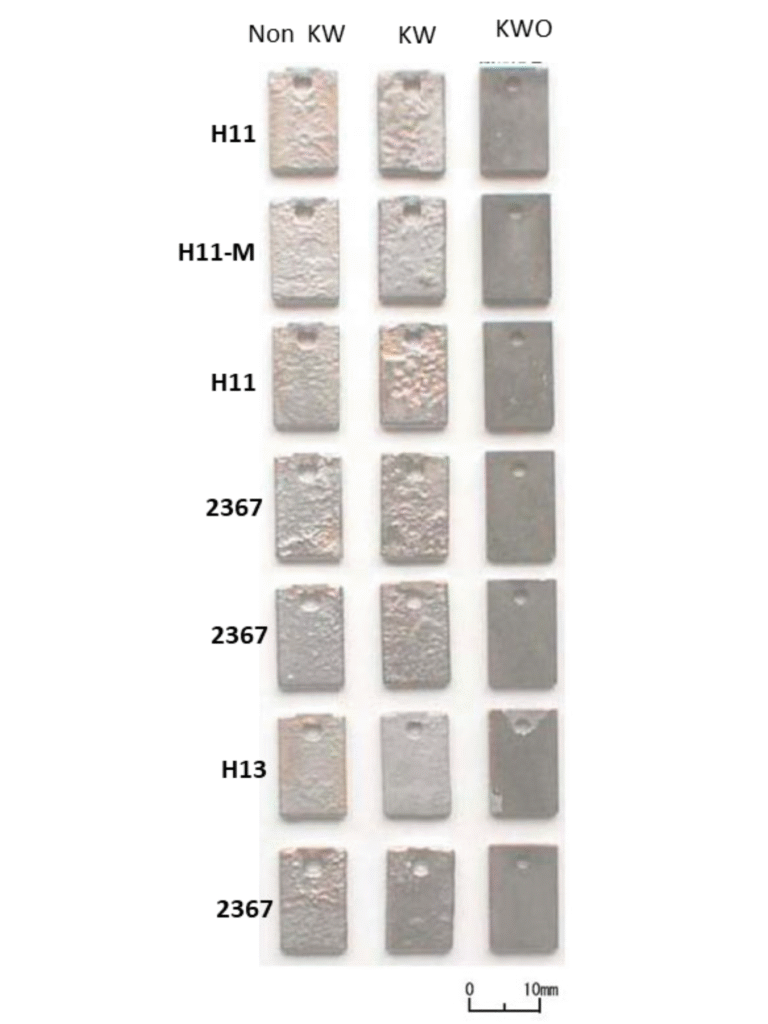
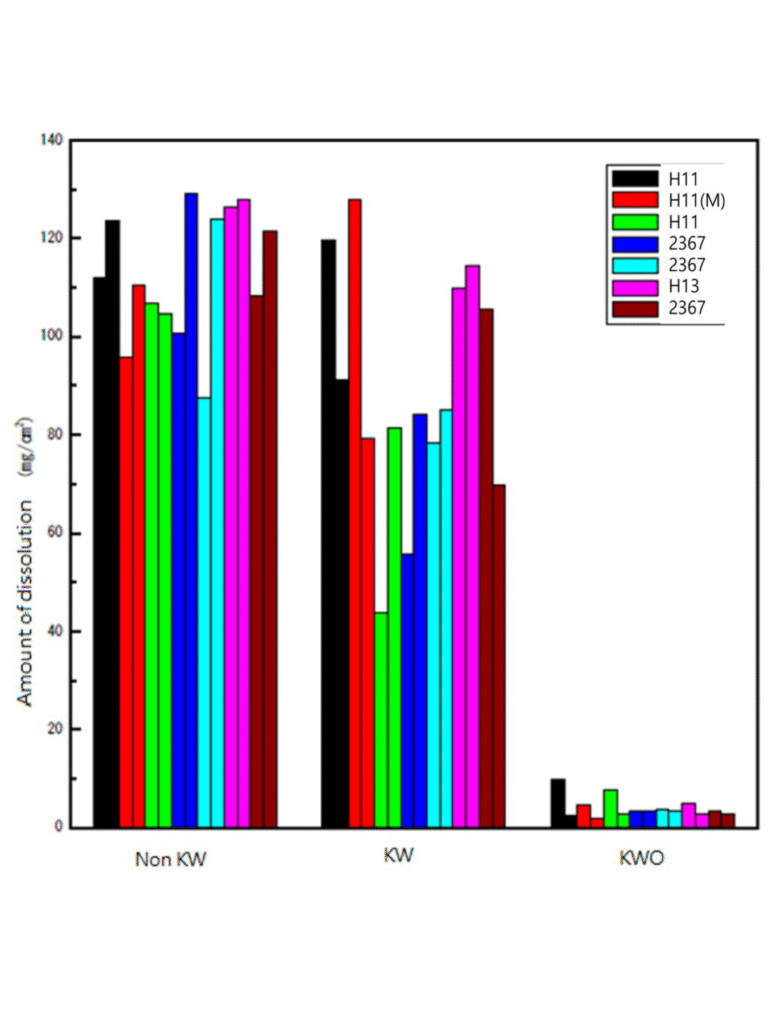
Corrosion
(Aluminum alloy wheel low mold)
Causes
Chemical Intermetallic Compound Formation Between High-Temperature Aluminum Melt and Mold Steel.
Countermeasures
Nitriding treatment.
Process Management
Mold cooling design.
Nitriding treatment.
Item 5
Cavitation
Causes
The air inside the mold cavity cannot be promptly expelled due to the high-speed flow of the aluminum melt. As a result, it becomes highly compressed, generating localized high temperatures that cause oxidation at the grain boundaries on the surface of the contacting tool steel, leading to grain boundary peeling.
Countermeasures
Change the flow direction of the melt.
Reduce the flow speed of the aluminum melt.
Process Management
Mold design.
Flow simulation analysis of the aluminum melt.
Item 6
Wear
Causes
Uneven Thermal Expansion and Friction Between Core, Cavity, and Slide Due to Heating.
Countermeasures
Mold cooling design.
Nitriding treatment (with different hardness settings).